10 Questions with USC Upstate's Female Student-Athlete of the Year, Anna Novo
4/28/2009 12:00:00 AM | Women's Tennis
April 28, 2009
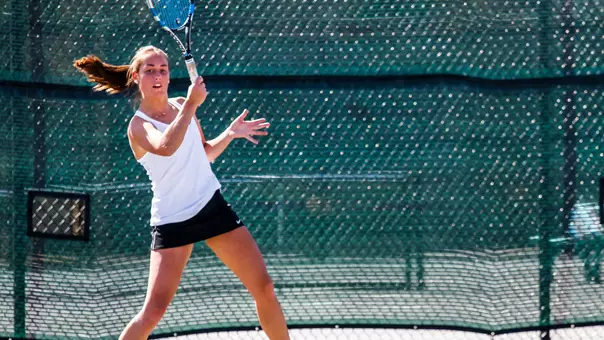
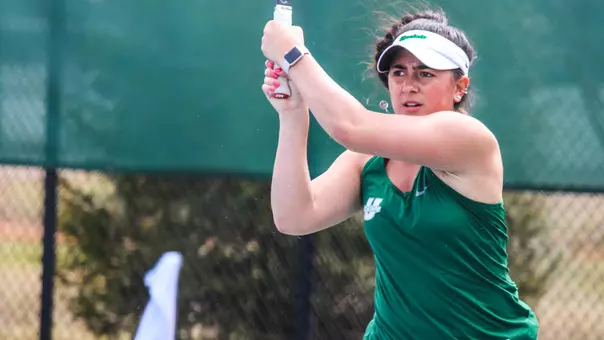
SPARTANBURG, S.C. - Anna Novo recently became the first person in the history of the Upstate athletic department to be named the female student-athlete of the year twice. The senior has been more than well-deserving after the record numbers she has put up over her four years in Spartanburg. In her senior campaign, she led Upstate to a third-place finish in the A-Sun and was a unanimous first-team all-conference selection, posting a 26-5 singles record and 21-8 doubles mark (16-1 in dual meet singles play at No. 1 singles, 9-1 in A-Sun play). She also broke Upstate's all-time singles, doubles and combined wins records while earning A-Sun Player of the Week honors three times her senior season.
Throughout her stellar career, Novo also became the first tennis player in school history to earn four all-conference selections, receiving All-Peach Belt singles honors in 2006 and 2007 before earning All A-Sun First Team honors in 2008 and 2009. She was named the A-Sun Player of the Year in 2008 and has also been recognized as the Player of the Week five times in her career, tying a conference record. She was ranked 124th in the nation in the fall and became the first Spartan to compete at the prestigious ITA All-American Championships in Palisades, California at Pepperdine University.
The Caracas, Venezuela native finished her career with a school-record 90 singles wins, 71 doubles wins and 161 combined wins and has also made an impact in the classroom, earning Peach Belt Presidential Honors in 2006 and 2007 and Atlantic Sun Conference All-Academics in 2008.
Before coming to Upstate, Novo was ranked as the number one player in Venezuela at the U-10, U-12, U-14 and U-16 age brackets. She also represented her country in the South American Championships in the U-12, U-14 and U-16 age brackets.
After graduation, the tennis phenomenon plans to spend a month backpacking throughout Europe. She recently sat down with upstatespartans.com and reflected upon her awards and experiences at USC Upstate.
You were recently named the female student-athlete of the year for the second straight year, something that no other Upstate athlete has done. What does this award mean to you?
It means a great deal, especially it being my senior year. It's nice for me to end my career and leave Upstate with such an honor. Every time I go out on the court, I always try to do my best. Although our team results may not have been as successful this season as they were last season when we won the A-Sun Championships, I think our team had a good year.
There's no doubt that you have left a permanent mark on this tennis program with all your record-breaking accomplishments and performances. What has Upstate given you in the past four years and how would you sum up your experience here?
It was a very unique experience and if I had the chance to come back as a freshman again, I would absolutely do it. Adjusting in the beginning was tough, but the people here were very friendly and welcoming and made it so much easier. I have really enjoyed my four years here and have recommended USC Upstate to many of my friends back home in Venezuela. I think the athletics department and university itself have been very supportive of foreign students and have treated me greatly.
How heart-breaking was it to lose such a close match to ETSU in your last tennis competition at Upstate?
I'm still upset about it. I don't think I was focused enough during the match. I have respect for Stupak, she's a good player. Many people have said that I played great but I know that it wasn't my best game. I don't have regrets about it but I know that I could have done better.
If you had to pick one moment, what would be your most memorable experience at Upstate?
Beating UNF this season, 4-3, was very exciting because Ana-Sofia Camberos won the deciding match for us and kept our conference winning streak alive. As a team, our adrenaline and energy levels were so high after that performance and we really displayed some teamwork.
Another memory I won't forget was the opportunity I had to travel to Pepperdine University in California last fall to compete at the Riviera/ITA All-American Championships. The level of competition I saw there was unbelievable. All of the girls were so good. I had the opportunity to play against Noelle Hickey, of Georgia Tech, who was an amazing tennis athlete. Also, Pepperdine University was beautiful and I enjoyed experiencing the different life out west.
Many of your teammates are also from South America. How did that affect your playing career here? Will you keep in touch with them in the future?
I think all of us coming from similar cultures made the transition to the U.S. and South Carolina much easier for all of us to get involved with the team and form stronger bonds as teammates. Each year, the new athletes to the team fit in well because our chemistry is so strong. I would like to keep in touch with them all in the future, and if and when I'm back in the area visiting, I'd like to watch the younger athletes progress on the court.
What do you think makes you so successful on the tennis court?
I think my mentality and attitude gives me a big advantage because I'm a strong-willed person who absolutely refuses to give up. If I'm losing, I'm still going to keep playing and give 110 percent.
What advice would you give to younger girls who aspire to be as good as you on the tennis court?
I would urge them to always try to stay focused the best they can, which can be hard. Just know what you're capable of, believe in yourself, and try to do your best every single time. Try to forget about everything else for the few hours you're out there playing and just focus on giving 100 percent and never give up.
What was your experience like representing your country as the top player at the South American Championships and playing on the South American Tennis Confederation tour?
It was a great experience for me to have the opportunity to represent Venezuela three times. It was very different from college tennis because at the time I was 12, 14 and 16 and was just out there to have fun. I went to Colombia, Bolivia and Brazil and wasn't focused on the sport the way I am now. I did meet many people who are now playing college tennis in the U.S. and met some of the guys who are now playing in the ATP tour. I think I really matured a lot through all of the traveling and meeting new people and it really helped me grow as a person.
What cultural and tennis-related differences exist between North and South America?
I think that in South America, we definitely show more affection and emotion because it's more normal in our culture. Not just specifically in greetings, but we also show more emotion for our disappointments and excitements. As far as on the tennis court, I had some prior experience and expectations watching American and Europeans play tennis before coming here. I think we play a little differently in South America, meaning we try more often to hit ground strokes, volleys and lobs whereas Americans sometimes look to hit the ball as hard as they can.
You graduate in one week. You've already achieved so many things at such a young age, but where do you go from here? Is tennis involved in the long run?
Right now I'm looking for a job related to my major in Information Management. I have applied to many technology companies and I'm just waiting to hear back. If I don't get a job with that, my plan is to go to Europe and play tennis there with a team. My primary focus is on securing a job and my career. I have achieved many things through tennis and I do love the sport and can see myself competing in it for the rest of my life, but I would really like to get some experience in my career. If I can do both, that will be ideal.